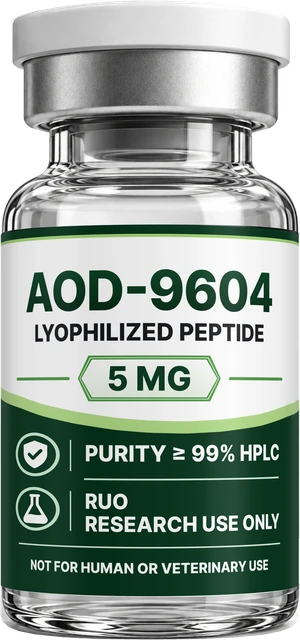
AOD-9604
hGH fragment 176-191 analogue
Related Laboratory Supplies
Essential items for laboratory research and sample preparation.
Third-Party Tested
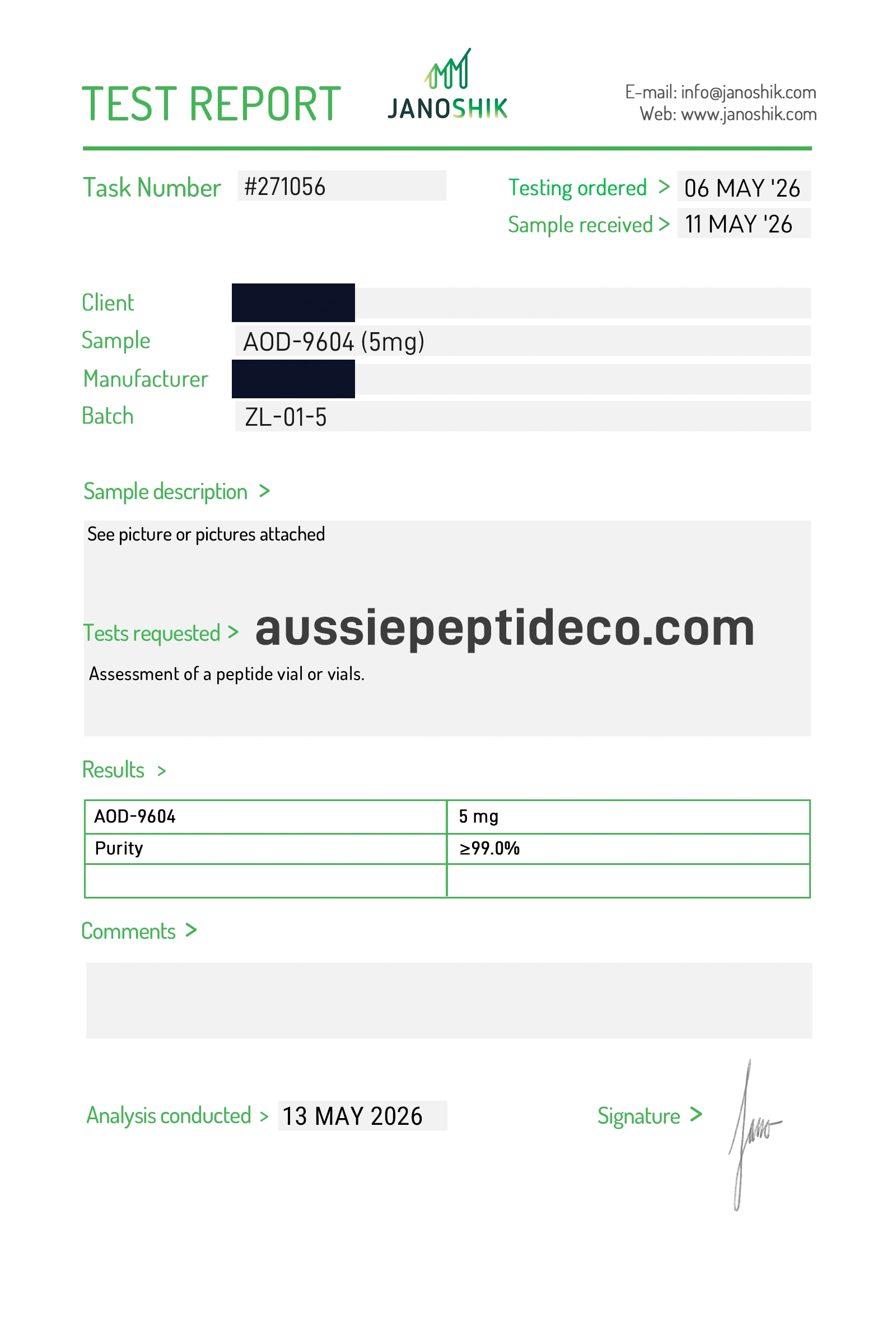
HPLC Purity & Mass Spec Identity
Batch-Specific COA
Certificate for Each Batch
Discreet Packaging
Plain, Unbranded & Tamper-Evident
Same-Day Dispatch
Order Before 2PM AEST, Australia-Wide
AOD-9604 is a synthetic peptide fragment derived from the C-terminal region of human growth hormone (hGH). It is studied for its potential involvement in lipid metabolism, fat-related signalling and metabolic regulation.
AOD-9604 research in Australia includes laboratory investigations into peptide structure, metabolic pathways and cellular responses. The material described on this page is intended strictly for laboratory and scientific research, not for human or veterinary use.
What Is AOD-9604?
AOD-9604, also known as the Anti-Obesity Drug 9604 peptide, is a modified fragment corresponding to amino acids 176–191 of human growth hormone. It contains 16 amino acid residues and is commonly described as a growth hormone-derived research peptide.
Unlike the complete growth hormone molecule, AOD-9604 does not reproduce the full range of growth hormone receptor-mediated activities.
Researchers have investigated this peptide in relation to lipid metabolism, lipolysis and fat-related biochemical pathways. Much of the early mechanistic evidence comes from preclinical models, and its precise molecular targets remain incompletely established.
The AOD-9604 research material supplied independently for laboratory work must be distinguished from formulations investigated in published clinical studies.
AOD-9604 in Metabolic Research
AOD-9604 has been examined in experimental research involving lipid regulation and energy metabolism.
Areas of scientific investigation include:
- Lipolysis and triglyceride metabolism
- Fat-related cellular signalling
- Lipid accumulation in experimental models
- Metabolic responses in preclinical systems
- Structure–activity relationships of growth hormone fragments
Published studies include preclinical investigations and clinical research involving specifically formulated AOD-9604.
Results from these studies should not be interpreted as evidence that independently supplied research material produces the same effects.
Further investigation is required to clarify its mechanisms and biological relevance across different research settings.
Quick Product Information
| Specification | Details |
|---|---|
| Product name | AOD-9604 |
| Alternative name | hGH Fragment 176–191 (modified) |
| Research classification | Synthetic growth hormone-derived peptide |
| Research focus | Lipid metabolism and metabolic signalling |
| Molecular formula | C₇₈H₁₂₃N₂₃O₂₃S₂ |
| Molecular weight | Approximately 1,815.1 g/mol |
| CAS number | 221231-10-3 |
| Peptide length | 16 amino acids |
| Physical form | Confirm against supplied batch documentation |
| Available strengths | 5 mg and 10 mg |
| Purity | Refer to verified batch-specific CoA |
| Analytical testing methods | HPLC and MS, where documented |
| Certificate of Analysis | Batch-specific documentation, where available |
| Storage requirements | Follow verified product-specific storage documentation |
| Intended use | Laboratory and scientific research only |
How AOD-9604 Works in Research
Lipid Metabolism and Lipolysis
AOD-9604 has been investigated for its possible influence on lipid breakdown and fat-related metabolic activity.
Preclinical research has examined changes in lipolysis, the biochemical process through which stored triglycerides are broken down into fatty acids and glycerol.
These findings provide a basis for further investigation but do not establish equivalent activity across experimental models.
Growth Hormone-Related Signalling
AOD-9604 originates from a specific region of human growth hormone, although its biological activity differs from that of the complete hormone.
Research has explored whether this fragment can influence lipid-related pathways without reproducing the broader growth-promoting effects associated with intact growth hormone.
The exact receptors and signalling mechanisms responsible for its reported metabolic effects have not been conclusively identified.
AOD-9604 vs Other Metabolic Research Peptides
AOD-9604 differs from incretin-based peptides in its molecular structure and areas of investigation.
| Compound | Scientific classification | Main research focus |
|---|---|---|
| AOD-9604 | Modified hGH fragment | Lipid metabolism |
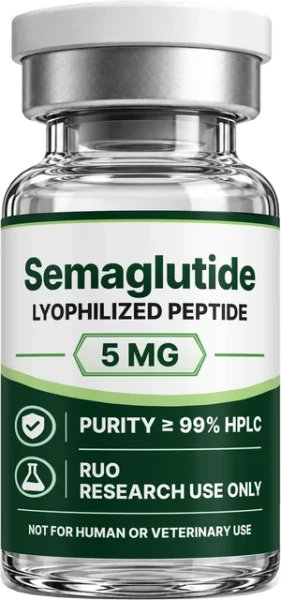
| Semaglutide | GLP-1 receptor agonist | Incretin signalling |
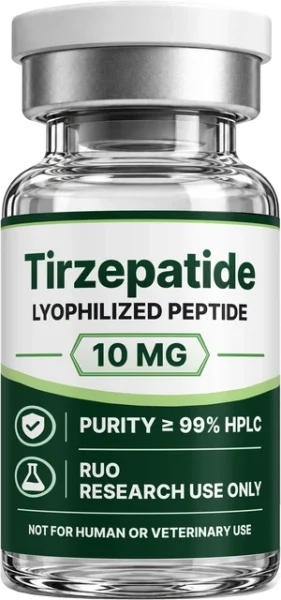
| Tirzepatide | GIP and GLP-1 receptor agonist | Dual incretin signalling |
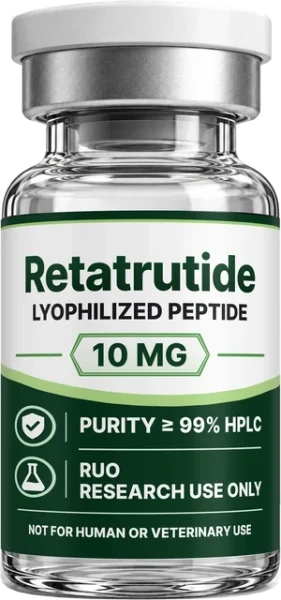
| Retatrutide | GIP, GLP-1 and glucagon receptor agonist | Multi-receptor metabolic signalling |
Unlike the listed incretin receptor agonists, AOD-9604 is not established as a GLP-1 or GIP receptor agonist. These compounds have different molecular targets and research backgrounds.
AOD-9604 Research in Australia
Australian laboratories working with AOD-9604 should maintain appropriate records of material identity, batch identification, analytical documentation and intended experimental use.
The Therapeutic Goods Administration (TGA) regulates therapeutic goods in Australia. A research-use label does not automatically exempt a material from applicable regulatory requirements.
AOD-9604 research material should not be represented as a TGA-approved medicine or as suitable for therapeutic administration.
Researchers should assess relevant Australian requirements, including importation, handling and intended use, before obtaining or working with the material.
Specifications
Certificate of Analysis
Quality, Purity and Batch Testing
Analytical testing helps laboratories assess the identity and chemical characteristics of AOD-9604 research material.
High-Performance Liquid Chromatography (HPLC) can be used to separate peptide-related components and assess chromatographic purity.
Mass Spectrometry (MS) provides molecular mass information that can support peptide identity verification.
A batch-specific Certificate of Analysis (CoA) should identify the material, relevant analytical methods, reported results and associated batch details.
Any stated purity percentage must be supported by actual testing documentation.
Analytical purity does not independently establish sterility, biological safety, formulation suitability or fitness for human administration.

Storage & Handling
Storage and Laboratory Handling
AOD-9604 should be stored according to the verified instructions supplied with the relevant batch.
Laboratories should consider temperature control, exposure to moisture and light, container integrity and contamination prevention when handling peptide samples.
All materials should remain clearly labelled and traceable through laboratory records.
Storage conditions and stability periods may depend on the formulation and packaging. No specific expiry period or stability after reconstitution should be assumed without supporting data.
Research Use Only: For Research Use Only. Not for human or veterinary use. This material is intended strictly for laboratory and in-vitro research purposes and must not be consumed or administered.
Reconstitution calculator: AOD-9604 5mg
Work out concentration and the volume to draw for each aliquot before you add diluent.
- Concentration
- –
- Volume per aliquot
- –
- On a 1 mL (U-100) syringe
- –
- Aliquots per vial
- –
A laboratory arithmetic aid only. Verify every calculation independently. Not dosing guidance; research use only.
AOD-9604 Frequently Asked Questions
AOD-9604 is a synthetic peptide derived from a modified region of human growth hormone. It has been investigated in scientific studies involving lipid metabolism and metabolic regulation.
AOD-9604 is a 16-amino-acid growth hormone-derived peptide fragment. Its structure includes a disulfide bond, and it is studied separately from the complete human growth hormone molecule.
Researchers investigate AOD-9604 for its possible effects on lipid-related biochemical pathways. Its precise receptor interactions and underlying molecular mechanisms have not been fully established.
AOD-9604 contains only a modified portion of human growth hormone. It does not reproduce the complete hormone's structure or its full range of biological activities.
AOD-9604 is a growth hormone-derived peptide investigated for lipid-related activity. Tirzepatide is a dual GIP and GLP-1 receptor agonist studied for its established incretin receptor activity.
AOD-9604 has attracted scientific interest because preclinical studies have examined its relationship with lipolysis and lipid regulation. The relevance of these findings varies across experimental models.
The molecular formula of AOD-9604 free base is C₇₈H₁₂₃N₂₃O₂₃S₂, with an approximate molecular weight of 1,815.1 g/mol. Salt forms may have different molecular specifications.
HPLC can assess chromatographic purity by separating peptide-related components. Mass spectrometry can support molecular identity verification. Results should be checked against the relevant batch-specific analytical documentation.
A CoA should identify the peptide, batch number, analytical methods, testing results and relevant specifications. It should also provide sufficient information to establish traceability.
No. The material described here is intended strictly for laboratory research. It is not presented as a therapeutic medicine or as suitable for human or veterinary administration.
No. This product is supplied strictly for in-vitro laboratory research. It is not approved for human or veterinary use and must not be consumed or administered.
Orders placed before 2PM AEST on business days are dispatched the same day from Melbourne. Standard Post takes 3–7 business days and Express Post 1–3 business days, both tracked and discreet.
Reviews
There are no reviews yet.